3rd Place Winning Entry | 2025 Still Life/Florals
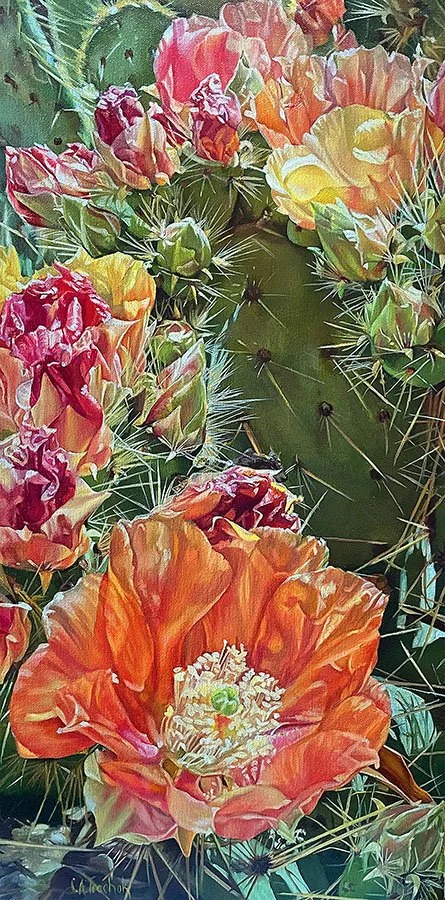
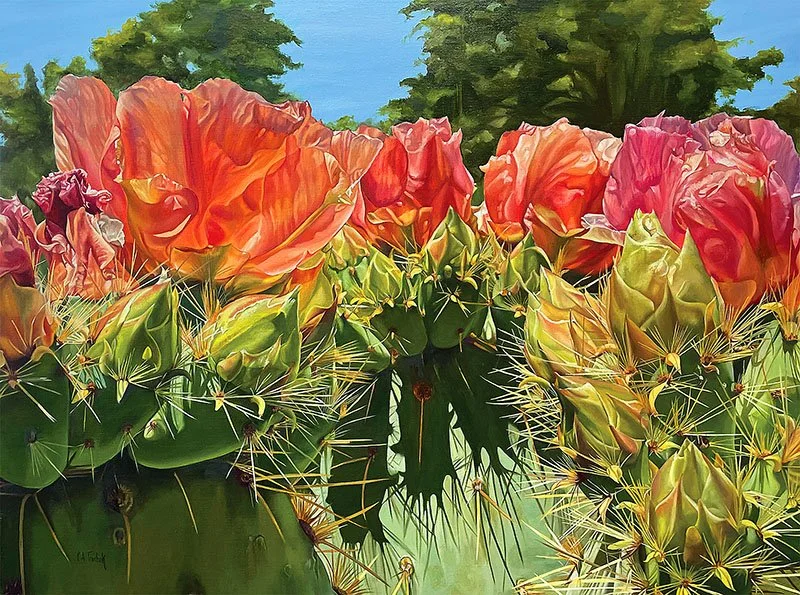
Cathryne Trachok, “To Worship in the Desert, “ oil, 24 x 12 inches.
All images © Cathryn Trachok, shared with permission.
CATHRYNE TRACHOK | 3RD PLACE
2025 STILL LIFE/FLORALS COMPETITION
California artist Cathryne Trachok has built her career around a deep appreciation for the beauty woven into everyday life. She thinks of her work as an ongoing study of light, color, and form. This approach opens her to inspiration in countless places, from florals and figures to landscapes and coastal scenes.
Working in oils, she brings each subject to life with attentive detail and a genuine belief in what she calls “the shared experience of art.”
Trachok has been a working artist for more than 35 years, beginning in commercial art and illustration before feeling the pull toward fine art. Oils became her preferred medium, and she spent years honing her skills through workshops with respected painters, steadily shaping the confident, expressive style that defines her work today.
In a recent conversation, we asked Trachok to reflect on the long path that led her from illustration to the fine art practice she now embraces.
Tell us about your artistic journey.
After art school, my artistic life became a long stretch of trial and learning. I began as an illustrator, figuring out how to listen to art directors, meet deadlines, and survive on popcorn and tea. In those pre-Internet days, I experimented with every possible way to work quickly and deliver finished pieces. When my children were young, I illustrated a children’s book every year or so and completed private commissions in between.
During those years, I discovered that oils were my favorite medium, and once the kids were older, I shifted from illustration to fine art and learned firsthand how different the two truly are.
Once I had committed to fine art, everything accelerated. I joined art groups that offered encouragement, community, and exhibition opportunities.
Workshops with artists I admired became essential; David Leffel changed my life, and Sherrie McGraw and Peggi Kroll Roberts shaped my growth. Entering shows, joining galleries, and meeting other artists kept me humble and motivated. In one workshop, Leffel said he wakes up excited to learn something new from whatever painting is on his easel. That’s the spirit I try to bring to my studio every day.
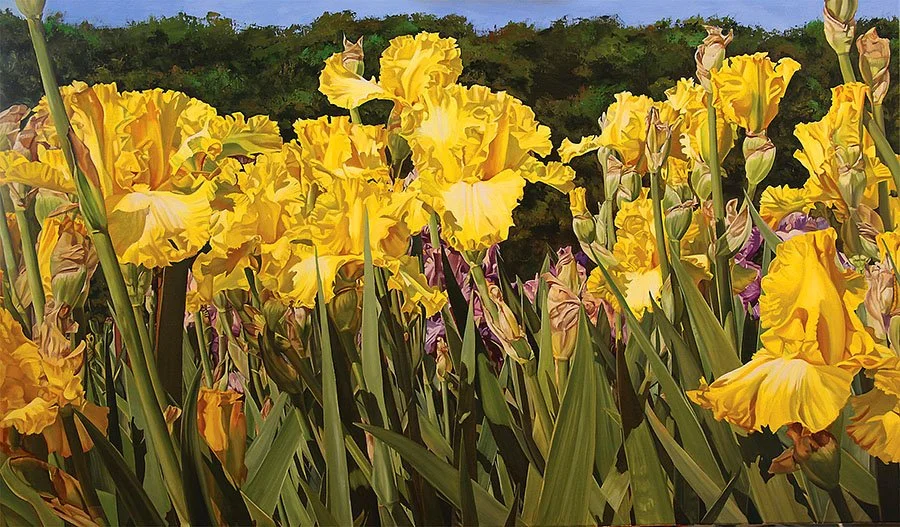
“Compliments,” oil
In considering your piece, "To Worship in the Desert," what inspired you to paint this collection of cactus flowers?
We have a grouping of cacti in our front yard that have bloomed every spring for years. The blossoms take my breath away. I’ve always loved contrasts, so the soft petals against the sharp spines make them especially compelling to paint.
How did you design the composition for this painting?
I began planning the composition as soon as the blooms appeared. The photo reference for this piece became my main guide, and because I already knew the direction I wanted, I photographed it with that vision in mind.
How did you balance the play of light on the flower petals versus the denser cacti?
The ethereal quality of the petals calls for thinner paint and glazes that let the light pass through. The cactus leaves, on the other hand, reflect color because of their thickness. For them, I use heavier paint, letting the paint itself tell more of the story than the light.
How did you make the flower petals appear luminous?
Their luminous quality is what drew me to these flowers initially. Paying attention to what sits behind each petal — like light shining through a curtain — helps reveal that luminosity. Just as neighboring colors influence one another, the shapes behind the petals help emphasize the effect of the light.
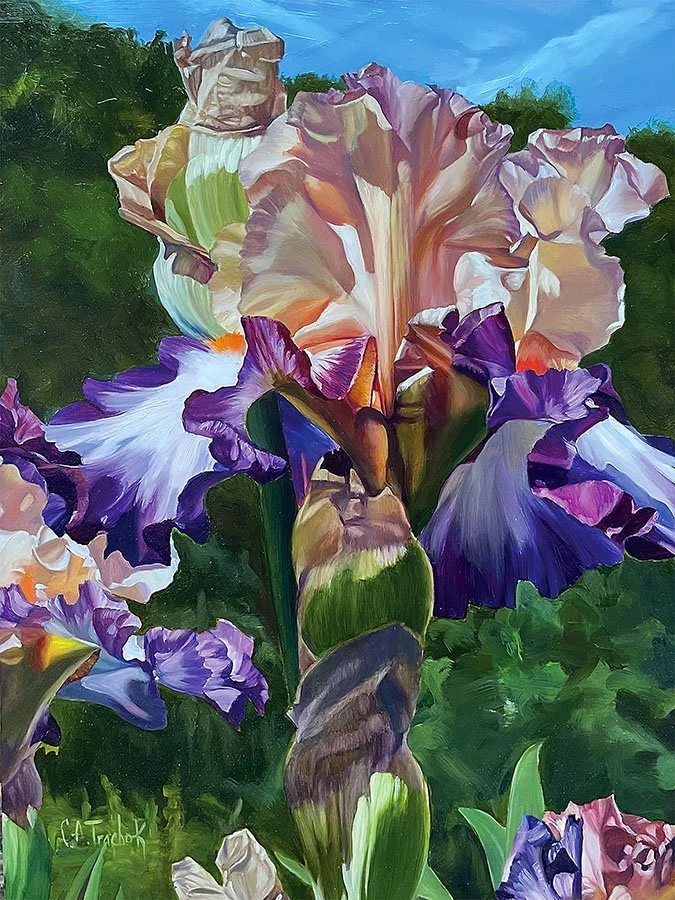
“East of Eden 2,” oil, 16 x 12 inches
You speak about art as being a shared experience. Can you tell us more about that?
One of my jobs as an artist is to communicate. We all “see” our world — clouds, beaches, mountains, deserts, houses, people, animals — and that act of seeing is a shared experience.
Pointing something out through art becomes a way of sharing that experience with others. The fun comes from the differences in how each person perceives a piece. There may be only three primary colors, yet there are infinite variations, which is why artists can paint within the same genre again and again without repeating themselves or becoming bored. The shared experience is recognizing something familiar; the takeaway is the countless thoughts and feelings each viewer brings to it.
What do you hope viewers see in your work?
I hope they see the same joy, humor, and reverence I find in putting paint to canvas or pencil to paper.
Trachok is represented by Floyd Fine Arts in Pawleys Island, South Carolina, and Mary Williams Fine Arts in Boulder, Colorado.
“The Virtues of Patience,” oil, 14 x 11 inches